 19 December 2025 |
Campaigning and research, News, Support, Treatments
19 December 2025 |
Campaigning and research, News, Support, Treatments
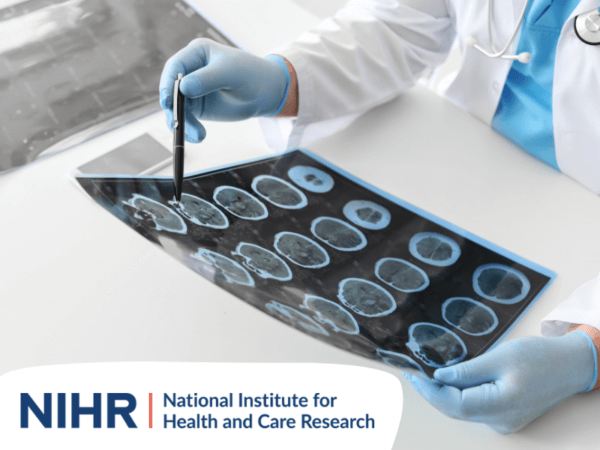
Hope for our community as NIHR funding is invested to establish a new Brain Tumour Research Consortium
The National Institute for Health and Care Research (NIHR) has today announced key funding which is a significant move towards better treatments and outcomes for brain tumour patients in the UK.
A £13.7 million investment will establish the NIHR Brain Tumour Research Consortium, in order to support research into developing new brain tumour treatments in the UK. Further funding for trials is to follow early in 2026.
The Consortium will bring together 48 hospitals, universities, cancer centres and charities and patients, in a coordinated approach to improve understanding of brain tumours, have earlier testing of new and innovative treatments, and make trials more available.
It will be led by Professor Juanita Lopez, from the Royal Marsden NHS Foundation Trust, Professor Darren Hargrave of Great Ormond Street Hospital and the UCL Great Ormond Street Institute of Child Health, and Dr Richard Mair from the Cancer Research UK Cambridge Institute at the University of Cambridge and Cambridge University Hospitals NHS Foundation Trust.
Professor Lopez said,
I am really excited for this transformational opportunity to build a contemporary, coordinated, national collaboration that will allow the best of science to be taken forward rapidly into clinical trials, and accelerate new drugs all the way to registration for patient benefit.
Brain tumours are the eighth most common cancer in the UK but amongst the toughest cancers to treat. So the Consortium will address five challenges contributing to the current lack of new and effective therapies:
To achieve its aims, activities will include:
Ahead of the National Cancer Plan being released in 2026, today’s announcement places a focus on brain tumours as a priority for research and innovation which could be a pivotal moment.
Emma McKeown, Brain Tumour Support Chief Executive, welcomed the news and said,
This is huge news for our community. Year on year, charities, patient organisations and passionate individuals have worked to campaign and lobby for greater innovation, better treatments options and support, and ultimately more hope for patients. This investment is long overdue and incredibly important for anyone facing this devastating diagnosis. We will ensure that where there are opportunities for our community to be involved we will encourage and support their engagement.
We eagerly anticipate the Consortium beginning its work and the prospect of real progress for patients. In the meantime, we continue to stand alongside patients and their loved ones, to provide all the support possible for anyone affected.
29 July 2026
Brain tumour charities call for progress on research, treatment and support This month, we joined five other key organisations dedicated to helping the brain tumour community in writing a joint letter to the new Secretary of State for Health and…
Read
2 July 2026
Our Head of Support Services and CEO shared the importance of timely, personalised support for people affected by a brain tumour. Brain Tumour Support was delighted to attend BNOS 2026 in Birmingham this week, joining healthcare professionals, researchers, charities and…
Read
16 June 2026
Brain Tumour Support has welcomed the powerful and emotive discussions that took place in Parliament yesterday (Monday 15 June), as the urgent need for greater investment in brain cancer research and treatment was debated. Securing this debate was a notable…
Read
21 May 2026
When someone is diagnosed with a brain tumour, they may be overwhelmed by the need to understand a new language. This article aims to provide a shortcut to that new language so that patients, caregivers, colleagues, employers, journalists, policymakers and…
Read