
Alex was diagnosed with a colloid cyst in 2022, but had absolutely no sign until it went seriously wrong and he found himself in a neurology ICU.
A brain tumour diagnosis can change life in an instant — but its impact often continues long after the initial shock has passed.
Although 1 in 3 people will know someone affected by a brain tumour, there is still a limited understanding of what it really means to live with the impact of a diagnosis. The challenges can be physical, emotional, practical and long-lasting — and many of them remain unseen.
This page shares real experiences, information and support for anyone affected by a brain tumour — at every stage, for as long as it’s needed.
Brain tumours are complex and varied. There are over 100 different types, and no two experiences are the same.
For some people, the impact is immediate and intense. For others, it unfolds slowly — affecting education, work, relationships, independence, confidence, and mental health over time.
The impact may be:
And for many, the hardest part is navigating all of this while trying to hold everyday life together.
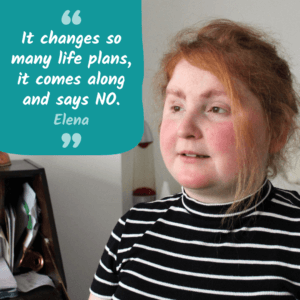
Brain tumours affect people in very different ways. These four themes reflect some of the most common — and most often overlooked — experiences shared by people in our community.
A diagnosis can disrupt education, friendships, identity and plans for the future, at a time when life is already changing fast.
“Everyone expected me to just carry on. But school, friendships and concentration felt completely different.”
“Low-grade” does not mean low impact. Many people live for years with uncertainty, ongoing symptoms and regular monitoring.
“Because my tumour is low-grade, people assume I’m fine. Living with the not-knowing is the hardest part.”
Understand more about low and uncertain grade
Many carers don’t identify as carers at all. They may see themselves simply as a partner, parent, child or friend — and not realise that support is available for them too.
“I didn’t realise support was for me as well. Talking to someone who understood lifted a weight I didn’t even know I was carrying.”
Find out about support for loved ones
Support doesn’t end when treatment does, or when someone dies. Grief can surface months or years later, and support should still be there.
“I didn’t need help straight away. But later on, everything caught up with me. Knowing I could come back mattered more than I can say.”
Alex was diagnosed with a colloid cyst in 2022, but had absolutely no sign until it went seriously wrong and he found himself in a neurology ICU.
Sian shares the rollercoaster journey she has been on in the year since a brain tumour was diagnosed after tests for an unrelated eye condition.
Moya and Mike share how the Brain Tumour Support Friends and Family Group has helped them through Mike’s diagnosis.
In 2016, Martyn’s life took a drastic turn. A devoted husband and father of three, he faced a sudden brain tumour diagnosis following a seizure.
Support can take many forms. Whether you have time, energy, a story to share, or simply want to show you care, there are lots of ways to stand alongside people affected by a brain tumour.
Every action, big or small, helps raise awareness, spark conversations, and ensure that vital support is there when it’s needed most.
Walk, run, swim or cycle for Brain Tumour Support and help raise funds that keep our services going. Take part solo, with friends, or as part of a group — at your own pace, on your own terms.
Mark a birthday, anniversary or milestone by fundraising for Brain Tumour Support. It’s a simple way to celebrate while helping others access the support they need.
From team walks and dress-down days to sponsored challenges, workplace and school fundraising is a powerful way to raise awareness and make a collective difference.
Sharing your experience can help someone else feel understood, supported and seen. Your story can raise awareness, challenge assumptions, and remind others that support is available.
Dedicate a star in memory or in support of someone you love. It’s a meaningful way to honour their journey and show your support for others.
A gift in your will helps ensure that future generations affected by brain tumours can access the support they need, whenever they need it.
 18 October 2026
Last week was a momentous one for the brain tumour community. It brought long-awaited Government commitments, a major report and recognition of progress within NHS teams.
Read Read more
14 October 2026
People living with brain cancer will get a faster route from research to treatment, under four steps set out by the Prime Minister today.
Read Read more
5 October 2026
Kash Raju describes himself as an ‘average family man’, working hard, into fitness, and living a busy life with his wife and three young children. But life for him and his(...)
Read Read more