People affected by a brain tumour diagnosis have an important voice in shaping research, influencing policy and improving support for others.
By sharing your experiences, contributing to research, or signing a petition you can help ensure that the needs of people affected by brain tumours are better understood and represented.
On this page you’ll find current opportunities to take part in research projects, surveys and Government petitions connected to brain tumours. These initiatives are led by organisations, researchers and members of the community who are working to improve treatment, understanding and support.
The Big Conversation is a project about adult social care in England, and it’s being run by the Independent Commission on Adult Social Care (also called the Casey Commission). In order to know how make social care better they want as many people as possible to take part.
The project wants to hear about adult social care from lots of different people across England, to share your ideas and help make social care work better. So it might be that you:
Equally, you do not have to know anything about adult social care, you might just want to share how you or a loved one would want care in the future.
You can take part online via the link below.
You will be asked this question: When we are old, disabled or have a serious illness, who should support us and how? and you will need to create an account to submit your idea and take part.
In answering the question, you can share your own ideas, and you can also see other people’s ideas and say if you think they are good or bad. It’s an opportunity to talk about what support you need and how you like to get support.
The Big Conversation is open for submissions until 20 September 2026.
Take part in The Big Conversation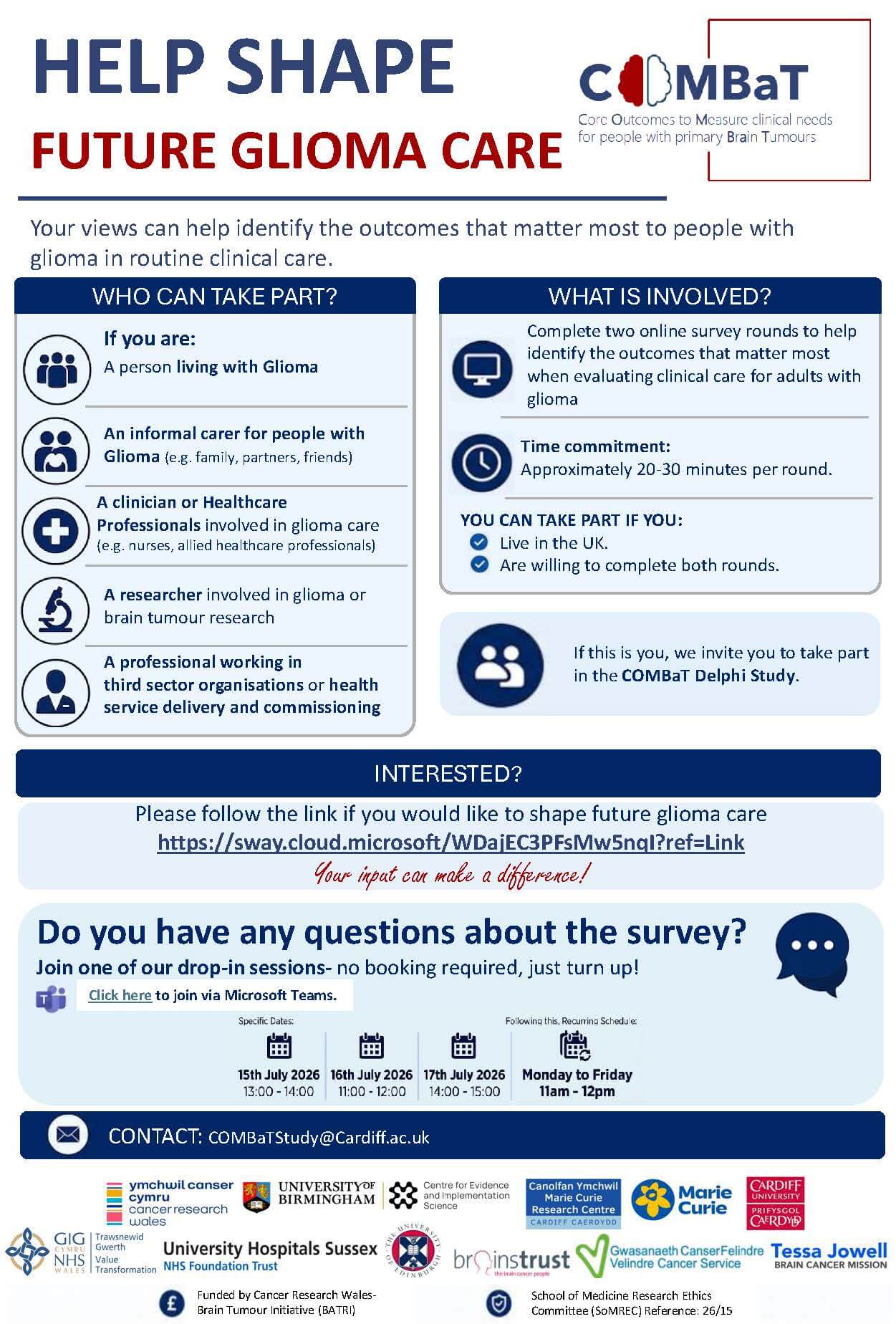
This study is funded by Cancer Research Wales, and led by Stephanie Sivell (Cardiff University) and Ameeta Retzer (University of Birmingham). They are currently recruiting participants for an online Delphi survey to help identify the outcomes that matter most to people living with glioma. The intention is to reflect the experiences, needs and priorities of those most closely affected and inform routine clinical practice in the UK.
· People living with glioma
· Partners/family members/friends of people with glioma
· Health care professionals involved in glioma care (including clinicians, nurses and allied health care professionals)
· Researchers involved in glioma or brain tumour research
· Professionals working in third sector organisations supporting the brain tumour community
· Professionals working in health service delivery and commissioning
Participation involves completing two rounds of online questionnaires. The first round has now closed and anyone who took part in this will be invited to complete the second round shortly.
However, if you missed this you but would still like the opportunity to be involved, there will be workshops coming up in autumn 2026. If you would like more information about participating in these please register your interest via the link below:
Register your interest
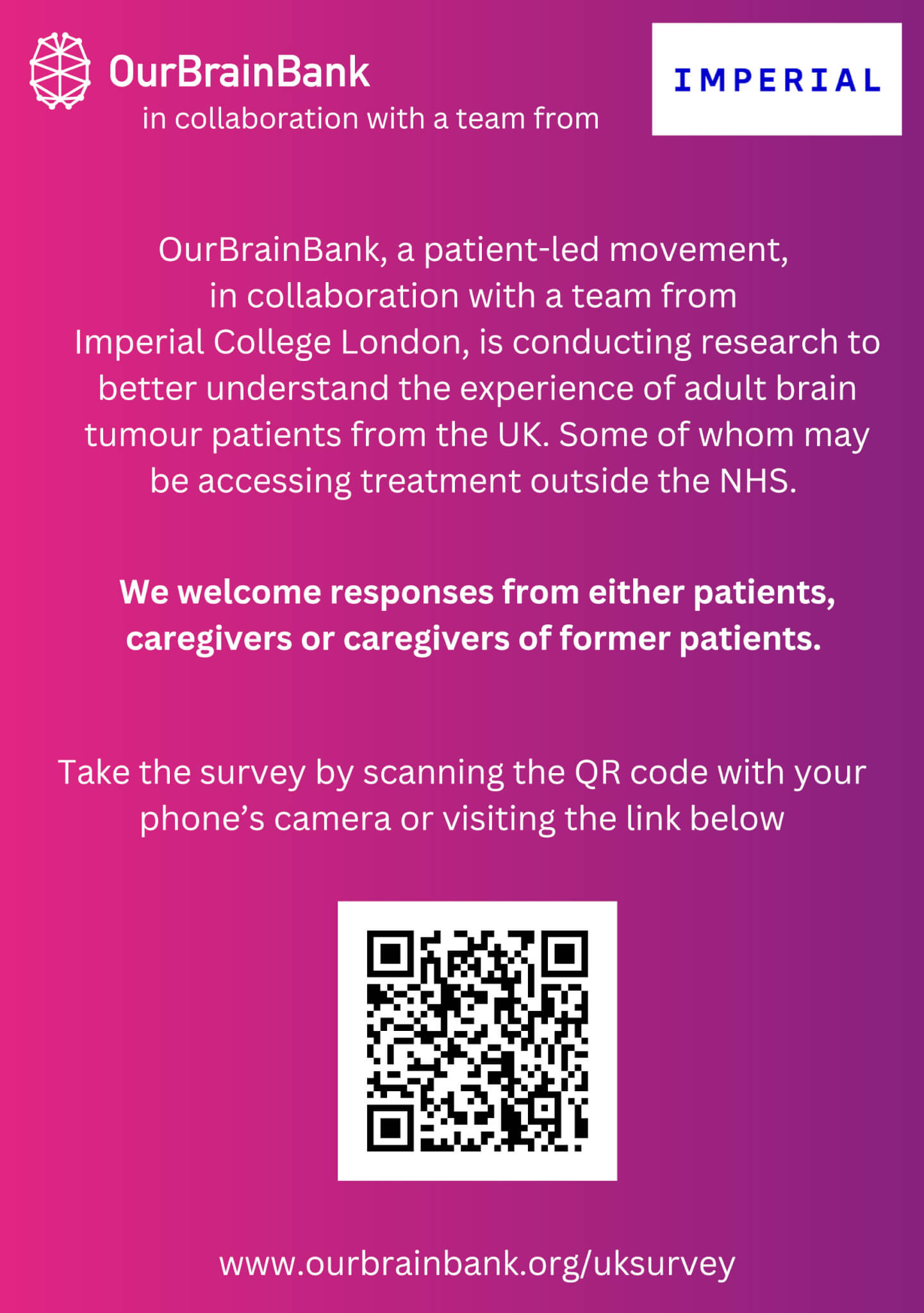
The project, which is being undertaken in collaboration with the computational oncology group at Imperial College London, seeks to explore information about brain tumour patients in the UK who are seeking treatment outside of the NHS/UK standard of care.
1) While it’s known that some brain tumour patients do explore or undergo treatment outside of the NHS, there is a lack of data on how widespread this practice is, the financial implications, the types of treatments being pursued and information on patients’ decision-making around these treatments.
2) Therefore, through this study, they aim to start collecting data on these issues to determine whether there is an unmet demand for these treatments that the NHS is not currently meeting. To collect this data, they have constructed a simple questionnaire which can be completed online.
For this phase, they are looking for UK adults (18 or over) who would be eligible for NHS treatment. They welcome responses from either patients, caregivers or caregivers of former patients. They are interested in hearing from you, even if you haven’t had treatment outside of the NHS, as they must hear both perspectives. Please scan the QR code or follow the link below to access this survey.
Go to the survey
 24 August 2026
The strength of a community coming together Lucy Wilkinson, Head of Support Services at Brain Tumour Support, reflects on the impact of recent national news coverage about bra(...)
Read Read more
29 July 2026
Brain tumour charities call for progress on research, treatment and support This month, we joined five other key organisations dedicated to helping the brain tumour community (...)
Read Read more
16 July 2026
The South West team at Gleeds Energy Limited have found an inventive way to support Brain Tumour Support while encouraging colleagues to get active and boost their wellbeing. (...)
Read Read more