
Support and informational sessions in-person and online via Zoom for patients, carers, family and carers across the UK.

You don’t have to tell your employer about your, or your loved one’s, diagnosis unless it is likely to affect your ability to do the job because it changes your behaviour, memory and thinking, or your physical ability, you might need to take a significant amount of time off work for appointments, treatment and recovery, or it poses a risk to yourself or others whilst at work
Although in many cases a brain tumour diagnosis will affect your ability to stay in full-time employment, not everyone has the financial luxury of being able to stop working altogether.
The laws that protect you if you have a brain tumour are The Equality Act 2010 if you live in England, Scotland or Wales and The Disability Discrimination Act 1995 if you live in Northern Ireland. This legislation aims to protect you from different kinds of discrimination including harassment and victimisation. Employers have to make reasonable adjustments i.e. changes in the workplace to enable you to keep working or return to work.
You’re disabled under both Acts if you have a physical or mental impairment that has a ‘substantial’ and ‘long-term’ negative effect on your ability to do normal daily activities.
Substantial is more than minor or trivial, e.g. it takes much longer than it usually would to complete a daily task like getting dressed
Long-term means 12 months or more, e.g. a breathing condition that develops as a result of a lung infection
Classed as having a disability means employers have a legal duty to support you and you must be treated the same as employees who don’t have cancer. If you’re treated less favourably than employees without cancer, that would be classed as discrimination.
If you need to take time off work for appointments or because you feel ill, try to tell your employer as soon as possible so they can plan ahead. If you are off for more than your sick leave allows, you may be entitled to one of the following:
Time off work or not being able to go back to work may pose financial worries and difficulties. Brain Tumour Support can help. We have a specially trained specialist Welfare Benefits advisor.
Talk to a Brain Tumour Support, Support Professional. They can help you work out what to say and when including talking to your employer. There are also support groups and an online Facebook Forum where you can ask others what they did.
To access our support services, call our Support Co-ordinator today on 01454 422 701 or email support@braintumoursupport.co.uk.
Our Support Co-ordinator is available Monday to Friday, 9 am to 5 pm. Our services are free and confidential. We're here to listen and support you through your journey.
#BrainTumourSupport #SupportMatters #TogetherWeAreStronger
As a service user, I know first-hand the impact of brain tumours on mental health. That's why I'm grateful for the support service that provided me with a safe space to talk, share, and heal.Fill in our support enquiry form
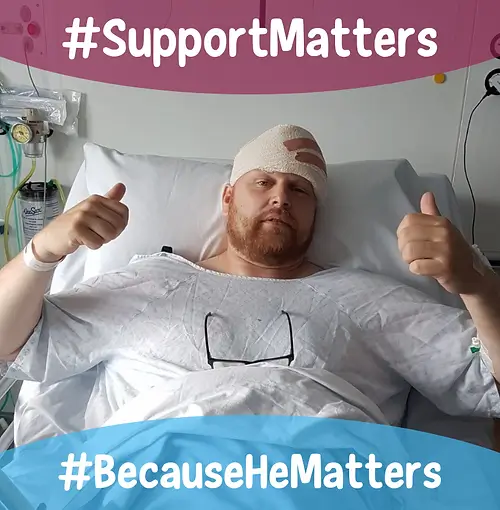
Support is here for you if you have been affected in any way by any type or grade of brain tumour, and whether you are a patient, family member, friend or carer.
Support and informational sessions in-person and online via Zoom for patients, carers, family and carers across the UK.
We believe patients and their families should have access to tools and services that can help them get the support they need.
Counselling helps patients, family members, friends and carers navigate their way through their brain tumour diagnosis.
Our online Facebook Support Forum supports anyone affected by any kind of brain tumour and provides friendly peer-to-peer support 24/7.
Understand the benefits and grants that may be available to you.
Learn about the benefits of exercise, nutrition and staying healthy.
Find information and advice from our library of brain tumour support resources.
Find out more about what you should expect from NHS services.
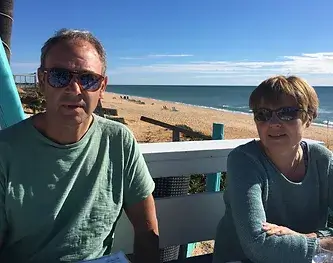
After two rounds of brain surgery and chemotherapy, Richard hit an all-time low and felt suicidal. But he says that attending one of our Support Groups as well as specialist support from our Brain Tumour Support counsellor saved his life.
Read Richard’s story