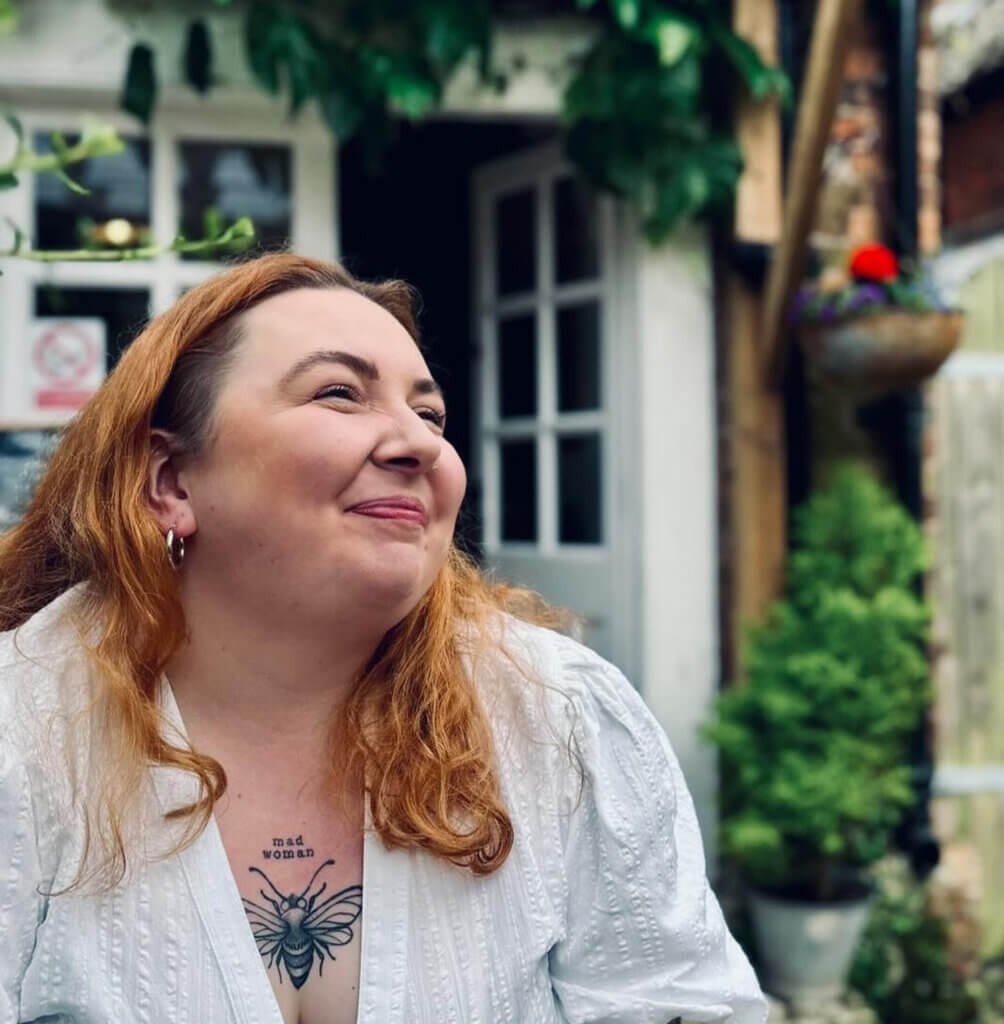
Hannah’s story
Hannah Cargill’s life was touched more than most by brain tumours. After sadly losing her mum to a brain tumour in 2024, Hannah herself also received a devastating diagnosis, and tragically she passed away in March 2026.
Hannah’s zest for life and determination to make the best of everything through such enormous challenges was remarkable. She was a wonderful champion of Brain Tumour Support’s work and whether posting to her Instagram or sharing her story with us, her words flowed with honesty, humour, and a huge heart.
My own private disco
I had been having headaches with visual disturbances (think like the lights of an AA van flashing in your left eye, or as I came to refer to it “my own private disco”) followed by nausea, for about a year. As someone whose Mum was currently living with a brain tumour, I did something I never did, and actually went to the GP. I was told it was migraines, likely brought on by stress (which I mean, yes, I was very stressed at the time, helping my Dad care for my Mum, so it was a fair assumption to make), and eventually the headaches and visual disturbances passed, so I plodded on.
Love carries on

Hannah and her mum
In June 2024, we sadly lost my Mum. After an eight-year-long fight, nerve damage had taken her mobility from her, so the last year had been incredibly hard on both her and us. But that sense of humour (and sarcasm, especially the sarcasm) never went anywhere. Mum had been deteriorating quite quickly over several days, but she knew that her friends from Scotland were coming to visit her.
Within four hours of them arriving, she’d passed. Surrounded by love.
She waited for them, and the memory will always bring me to tears.
I’m so grateful for her friends for loving her as they did.
I’m so grateful to my Mum for teaching me how to let love in, even when it’s hard.
My biggest regret is that we didn’t know what help and support was available for Mum. I will always wish we could have done more for her, I will always wish we’d known about Brain Tumour Support sooner.
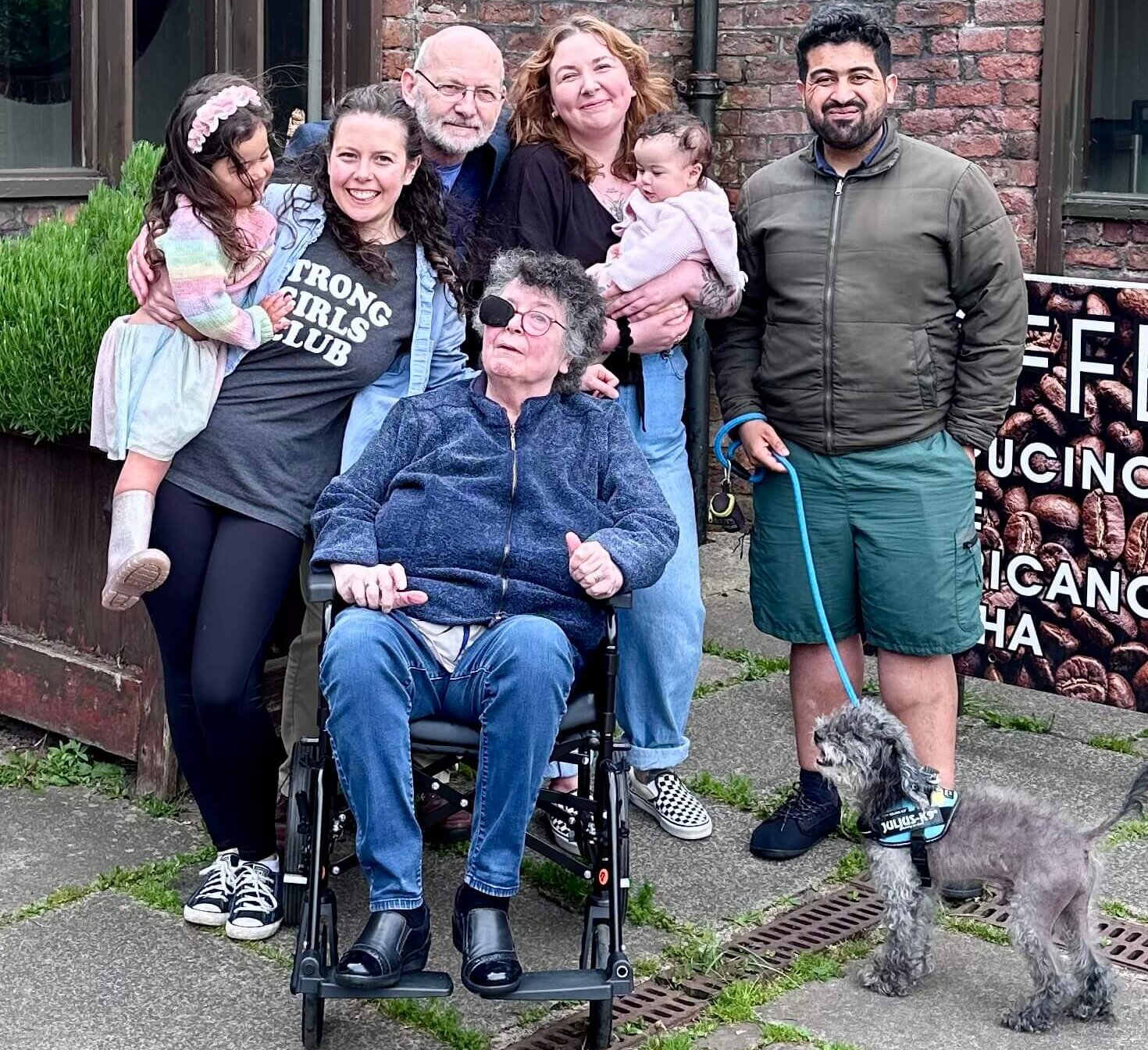
Hannah with her mum, dad and family
But one thing I do know is that she knows I love her – which is a sentence I will never say in the past tense, because the love carries on, you just channel it somewhere new.
Mum’s instructions to Dad and me for the day that was passed were “get really drunk and play silly card games”. I would have preferred it if she stipulated that Dad had to let me win them sometimes. But it’s a tradition we’ve continued, and it’s when we speak about her the most.
We will always speak about her.
A sudden seizure
A few short months later, in November 2024, I was going for a drink after work with a friend, when for the first time in nearly a year, my own private disco was back, along with sudden nausea. I immediately did an excellent parallel park (I guarantee you all my friends will roll their eyes when they read that sentence because I bring it up every time), promptly took off my new shoes so I wasn’t sick on them, then fell out of my car and spectacularly headbutted the pavement, due to a tonic-clonic seizure.
I woke up in the hospital to the Doctor saying, “Hi, I’m Hannah – sorry, you can’t even wake up after an induced coma and be the only Hannah in the room, can you!” They’d put me in a coma so that I’d stay still long enough for them to scan me.
It is what it is
My brain tumour was completely different to Mum’s – genetically unrelated – I had a grade 2 IDH mutant astrocytoma spanning the majority of the right side of my brain. Bit of a cruel joke from the universe, I thought, but I applied the same logic that I apply to all bumps in the road:
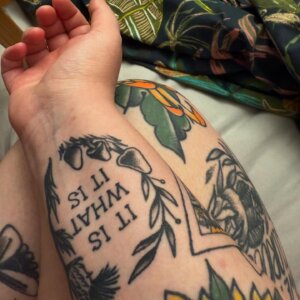
“It is what it is”. I even used it as an excuse to get that tattooed on me.
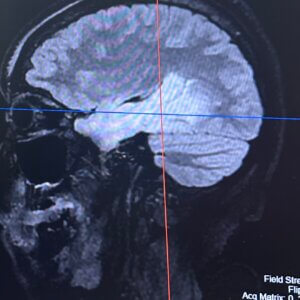
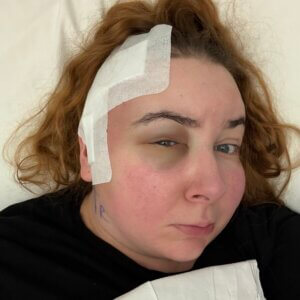
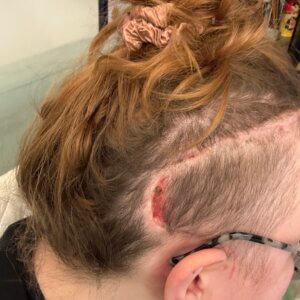
In January 2025, I had my first craniotomy at Southmead Hospital. It went well, and I was discharged three days later, ready to do anything and everything to get my life back on track. But the scans had shown some abnormalities on the left side of my brain, too, so the big giant pause button was, once again, applied to my life.
My oncologist Consultant spoke to me about a relatively new drug called Vorasidenib, explaining how it was designed for low-grade gliomas, like mine, to prevent them from advancing to a higher grade and delaying the need for chemotherapy. He himself didn’t have access to the drug, so he wrote to a colleague at a different hospital for their consideration. The answer was no, due to the amount of residual tumour remaining. So we watched and waited for a little while. Until I got some new symptoms in April/May 2025, my scan shocked my medical team.
My tumour was no longer ‘sleepy’, it was on a rampage: craniotomy number two and subsequent histology showed the tumour was now grade 4. In just a matter of months.
Hope and support
Now I’m living the radiotherapy and chemotherapy life, and putting one foot in front of the other and believing blindly in hope.
Hope that it gives me more time, hope that miracles do happen, hope that nobody else ever has to live a story like this. Hope that my story could help in some small way.
Mostly, I hope that I get to see my three nieces grow up, that I can one day return the favour and look after my Dad after everything he’s done for me.
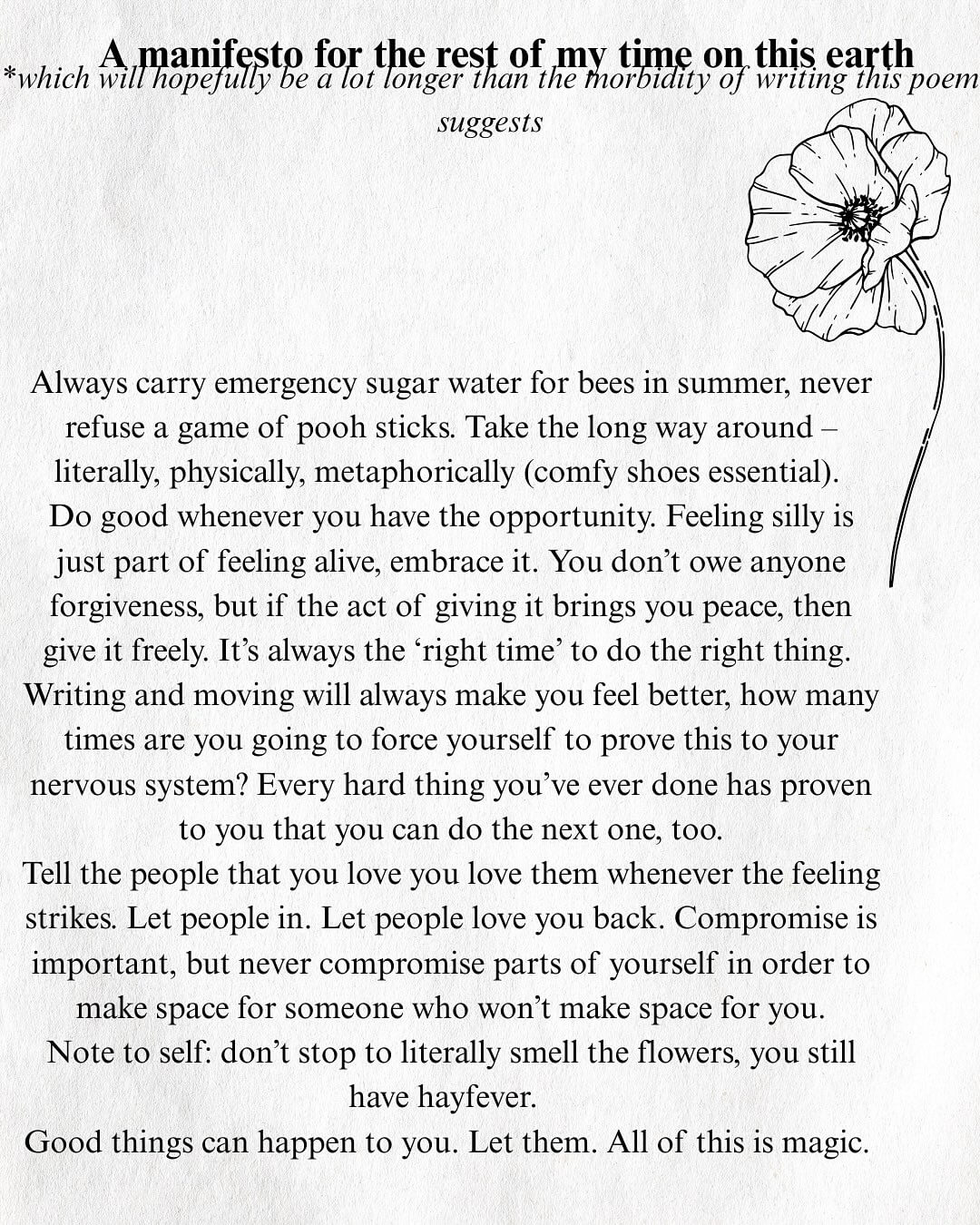
“The aim is to die with the tumour, not from it.” Someone said this to me in the early days after my first surgery, and it has sort of become my mantra. I cannot thank Brain Tumour Support enough for the support they’ve provided throughout this journey, as well as those in the community who have reached out. I don’t have the words to explain how having a community of people who understand what you’re going through can convince your nervous system to let you take a breath, and how taking that breath can change your whole outlook.
Thank you for always being there, for the late night messages, the impromptu check-ins, for showing me that whilst we might not be able to win this fight, we can sure as damn well still live whilst we fight it.
Gratitude despite everything
The strangest thing about a brain tumour diagnosis, and I suppose probably any diagnosis, is that your life suddenly has a ‘before’ and an ‘after’: a ‘who you are now’ and a ‘who you’ll never be again’. It took me a long time to grapple with that reality. But nearly nine months since hearing the words “you have a brain tumour”, I can’t help but find myself oddly grateful. The brain tumour community is one that nobody wants an invite to, but it’s full of some of the kindest and warmest people I’ve ever met, some of whom I am now incredibly proud to count amongst my friends.
The life I had (very vaguely, by which I mean not at all, haha!) planned out, probably isn’t possible for me now. But we pivot, and I will start building a big, bold, beautiful life, despite everything. As my friend Sally reminded me of Taylor Swift’s greatest lyric: “To live for the hope of it all.”
Hannah Cargill | August 2025
A sister’s special support
Knowing how much Brain Tumour Support means to Hannah, her sister Katie wanted to organise a special fundraising event, and she decided to do something that would be a challenge with a difference and have a particular relevance in Brain Tumour Awareness Month.
So on the 8th March 2026, members and visitors to ESSENTIAL STRENGTH GYM in Liverpool took part in a challenge to lift 18,204.2kg between them – the significance of the number being the estimated collective weight of all the brains that will be diagnosed with a brain tumour within a year. Katie’s very special fundraiser in honour of her sister more than achieved their target to raise vital funds, and we were so moved to have this support.
On 19th March, Hannah passed away peacefully at home. Katie said,
I do not have the words to describe how I am feeling right now (Hannah would!), but it feels like there is a massive hole in the world that nothing will ever quite fix.
Brain tumours can affect any one of us, irrespective of age, lifestyle or general health. Every 40 minutes, someone in the UK receives this shocking diagnosis, and when faced with the words ‘You have a brain tumour’, the right support to help navigate the path ahead is vital.
Brain Tumour Support wants to ensure that no one feels alone at any stage of that journey. So if you able to donate, helping us to be here for more people like Hannah, we would be very grateful. Our support services are always free to access and rely on the generosity of fundraising and donations to be maintained. Thank you so much.
Make a donation