
There are many ways we can support anyone affected by a brain tumour, their family, friends and carers.
The key elements of keeping well include healthy eating, taking moderate exercise and having a healthy mind. Research suggests that a healthy diet while being physically active can also help reduce the risk of developing other health problems, such as heart disease, stroke and diabetes.
There is no evidence that shows any specific food or diet is associated with the management or treatment of brain tumours, but a good diet is necessary in order to feel as well as possible.
It will help ensure that your body has the essential minerals and nutrients it needs to keep up your strength and energy to cope with treatment, healing and recovery, lower your risk of infection and cope with the many other physical and mental demands that are made of you on a daily basis.
It’s also essential to drink plenty of fluids before, during and after treatment. Being properly hydrated will help your body process drugs including chemotherapy, avoid bladder infections and prevent constipation, often a result of medication.
If you have diarrhoea or are vomiting as a side-effect of treatment, speak to your oncology team. They can supply or advise you on special rehydration drinks or powders and assess your diet.
Always speak to your oncology team for advice and be careful of fad diets and unqualified advice.
See the NHS Eatwell guide
Even a small amount of exercise can have a major positive impact on your physical and mental well-being. Make sure that what you do is appropriate for your level of health.
It doesn’t need to be rigorous. Even a few steps are better than none at all and you can increase these in time. Try and incorporate movement into your everyday activities. This includes housework, for example vacuuming, gardening, walking to the shops, and walking up the stairs instead of taking the lift. More energetic activities, such as jogging, cycling, weeding or planting in the garden are also good if you are up to it.
What you do will depend on what stage you are at with treatment, the activities you enjoy and your level of fitness
Your oncology team might encourage you to start some physical activity before treatment starts to help improve your general fitness level. It can also help with your recovery after treatment and may reduce the side effects. It can also help you feel more in control and mentally prepared for treatment.
Doing exercise during cancer treatment is generally safe. But there may be activities you need to avoid or be careful with. It is important not to suddenly start intense exercise that you are not used to. Some physical activity during treatment will help you maintain your fitness and strength.
It may also help you manage and reduce the risk of the late effects of treatment, changes in weight and other health problems, such as heart disease.
NOTE: Ask your GP or oncology team for advice and ask if there is a physiotherapist or you can ask for advice on exercising safely. An occupational therapist and exercise referral schemes may also help.
To access our support services, call our Support Co-ordinator today on 01454 422 701 or email support@braintumoursupport.co.uk.
Our Support Co-ordinator is available Monday to Friday, 9 am to 5 pm. Our services are free and confidential. We're here to listen and support you through your journey.
#BrainTumourSupport #SupportMatters #TogetherWeAreStronger
As a service user, I know first-hand the impact of brain tumours on mental health. That's why I'm grateful for the support service that provided me with a safe space to talk, share, and heal.Fill in our support enquiry form
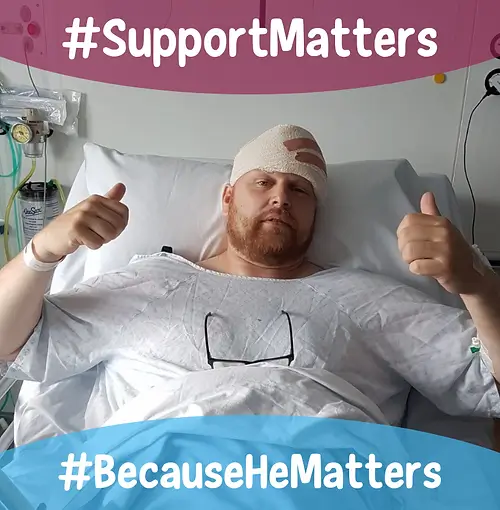
There are many ways we can support anyone affected by a brain tumour, their family, friends and carers.
Helping you manage the practical steps for you and your family through a brain tumour diagnosis and treatment.
Find information designed to inform and empower patients, caregivers and loved ones.
Our monthly schedule of online support sessions offers the opportunity for patients, family members, friends and carers to connect, gain support and information, and share experiences via Zoom.
The groups are open to anyone affected by any type or grade of brain tumour, whether as a patient, family member, friend or carer.
We host support groups in Devon and Cornwall, Dorset and Hampshire, Wales and the Midlands.
Our online Facebook Support Forum supports anyone affected by any kind of brain tumour and provides friendly peer-to-peer support 24/7.
 16 July 2026
The South West team at Gleeds Energy Limited have found an inventive way to support Brain Tumour Support while encouraging colleagues to get active and boost their wellbeing. (...)
Read Read more
16 July 2026
We recently received a grant from bClear Communications to help fund one of our Men’s Support Groups. This online group, run by a male Support Professional, gives patien(...)
Read Read more
2 July 2026
Our Head of Support Services and CEO shared the importance of timely, personalised support for people affected by a brain tumour. Brain Tumour Support was delighted to attend (...)
Read Read more