
Suzanne’s story
I had so many questions and no one to talk to about them At the age of 21, Suzanne landed her dream job on a cruise ship. She was so excited about the future and was looking forward to seeing…
Read Suzanne’s story
Brain tumours can present in a number of different ways and most symptoms, such as worsening fatigue, are not specific to brain tumours and may be symptoms of other illnesses, so they can take a while to diagnose. Always consult with a GP.
Based on what you say, your GP might make a diagnosis and/or refer you to another service and they might also prescribe you medication. They should explain what it’s for as well as the risks and benefits so you can decide whether or not to take it. In this case, they will usually make a follow-up appointment. You can make an earlier appointment if things aren’t getting better.
GP appointments involve talking about a wide range of personal information. They won’t judge you for your concerns. Everything you tell your GP is confidential unless they think you’re at risk of seriously harming yourself or someone else or they might need to talk to another health professional so they can make a proper assessment. The GP will record this on your medical notes, which will be kept confidential. This means they should not pass them on to anyone else unless:
If you’re unhappy with how your appointment went or unsure about the advice, you can ask for a second opinion from another GP or a specialist. You can make an appointment with another GP at your practice or change the practice altogether if they refuse to arrange a second opinion.
You must be registered with a local practice to make an appointment. You can call, email or visit a local practice to see if you can join. It’s free to register. To find local GP practices:
You usually need to be in a surgery’s catchment area i.e. the local area that the surgery covers.GP surgeries can take patients from outside their area, but they don’t have to. Registering with a GP surgery outside your area may mean you can’t get home visits, or other community services, including physiotherapy and midwife appointments.
If you don’t have a GP but need to see one urgently you can:
If your doctor suspects you may have a brain tumour, you will undergo further investigations. You may be referred to a neurologist, a doctor specialising in the brain and central nervous system. You may also undergo some diagnostic scans, such as a CT and/or MRI scan, which provide a 3D image of your brain. Following these, you may have a biopsy of your tumour, to determine which type and grade of tumour you have.
To obtain further information about the genetics of your tumour, you may be offered a biomarker screening test. In addition to aiding diagnosis, biomarker tests give an indication as to how fast your tumour may grow and how well you may respond to certain treatments
Visit our newly diagnosed with a brain tumour page.
You might feel relief at having an answer but you and your family might also feel shock, fear, relief, worry and overwhelm.
It is very important to look after your physical and mental health at this time. See these resources for ideas on how to look after your health and well-being.
To access our support services, call our Support Co-ordinator today on 01454 422 701 or email support@braintumoursupport.co.uk.
Our Support Co-ordinator is available Monday to Friday, 9 am to 5 pm. Our services are free and confidential. We're here to listen and support you through your journey.
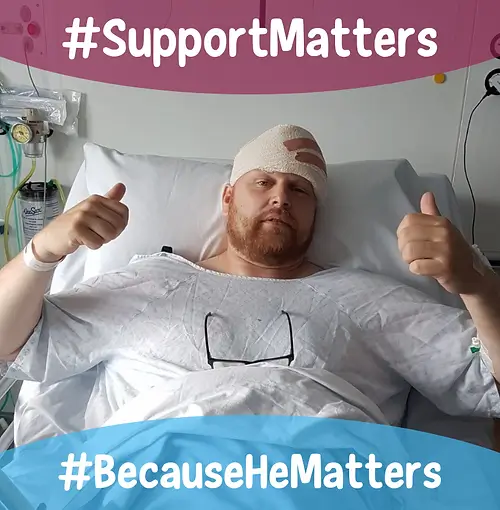
#BrainTumourSupport #SupportMatters #TogetherWeAreStronger
As a service user, I know first-hand the impact of brain tumours on mental health. That's why I'm grateful for the support service that provided me with a safe space to talk, share, and heal.Fill in our support enquiry form

I had so many questions and no one to talk to about them At the age of 21, Suzanne landed her dream job on a cruise ship. She was so excited about the future and was looking forward to seeing…
Read Suzanne’s storyUnderstand more about brain tumours, types, symptoms and treatment as well as up-to-date statistics.
The signs and symptoms of brain tumours in adults can include headaches and seizures.
There are more than 130 different types of brain tumours. The most common type of brain tumours in adults is glioblastoma multiforme (GBM).
We not only support patients but also families, carers and loved ones who are dealing day to day with the impact of a brain tumour.
Although it can be difficult to think about the later stages of life, a brain tumour diagnosis can force you to consider your options.
Learn about medical terminology. We’ve put together a list of useful medical terms in a handy A-Z.
 16 July 2026
The South West team at Gleeds Energy Limited have found an inventive way to support Brain Tumour Support while encouraging colleagues to get active and boost their wellbeing. (...)
Read Read more
16 July 2026
We recently received a grant from bClear Communications to help fund one of our Men’s Support Groups. This online group, run by a male Support Professional, gives patien(...)
Read Read more
2 July 2026
Our Head of Support Services and CEO shared the importance of timely, personalised support for people affected by a brain tumour. Brain Tumour Support was delighted to attend (...)
Read Read more